

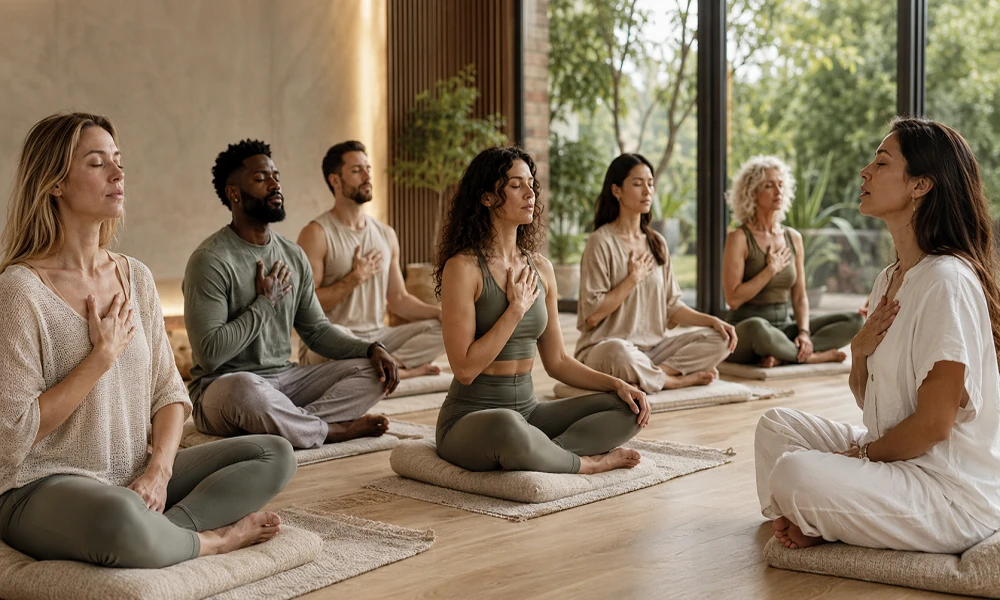
Breathing happens without instruction. Yet the moment a person begins to notice its pace, depth, and texture, an automatic act becomes a point of attention. That shift has shaped contemplative traditions for centuries. Today, it offers a practical pause amid alerts, deadlines, and restless evenings.
It can happen before a meeting, after a commute, or while sitting quietly at home. Its value lies less in complexity than in intention: noticing the breath, working with it gently, and returning to the present.
Ancient Roots, Living Practice
Cultures across the world have long treated breathing as more than a mechanical function. Indian pranayama traditions explored the relationship between breath, energy, and attention. Buddhist meditation often used breathing as an anchor for awareness. Taoist and qigong practices also worked with breath, movement, and inner balance. Their philosophies are distinct, but each recognized that changing how people breathe can change how they experience a moment.
Modern methods draw from this broad inheritance while adapting it to new settings. A person may now encounter breathwork in a studio, through a guided digital session, or as part of a wider mindfulness routine. Its long history shows that it is more than a passing wellness trend, even when modern forms look different from traditional roots.

Why the Breath Suits Modern Life
The breath is always available. It needs no special room, clothing, or equipment. This makes conscious breathing unusually easy to place between everyday activities. A short pause can mark the transition from work to home. A slower rhythm may create space before a difficult conversation. Simply observing an inhale and exhale can interrupt the habit of moving from one task to the next without noticing how the body feels.
Breathing also gives attention a clear physical focus. The mind may wander, but the next cycle offers another place to begin. This resembles the present-moment awareness used in mindfulness and meditation practices. Research into these wider practices shows promise in some areas, but findings vary by method and study quality. A grounded approach therefore avoids treating intentional breathing as a cure. It is better understood as a supportive wellbeing tool, not a replacement for medical or mental health care.
What a Session Can Look Like
There is no single universal technique. Some sessions emphasize slow, even breathing. Others use a longer exhale, brief pauses, sound, or a steady sequence led by an instructor. The pace and intensity can shape the experience, so a gentle method is often the clearest place for a beginner to start.
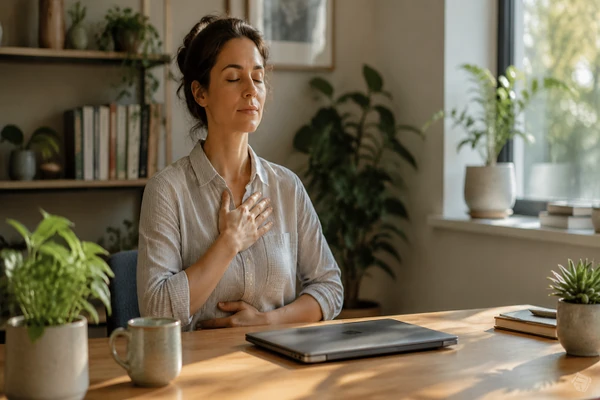
A person might sit comfortably, release tension from the jaw and shoulders, and notice where movement appears in the body. The next few breaths can remain natural. From there, the inhale may become a little smoother and the exhale a little longer, without strain. The NHS offers a simple breathing exercise for stress that likewise favors comfortable, regular breathing rather than force.
The goal is not to perform a perfect pattern. It is to notice. Temperature at the nostrils, movement through the ribs, and the impulse to rush can all become useful information. If dizziness, tingling, discomfort, or distress appears, the person should stop the exercise and return to normal breathing. Anyone with a relevant health condition, pregnancy, panic symptoms, or concerns about intensive techniques should seek appropriate professional guidance.
Consistency Matters More Than Duration
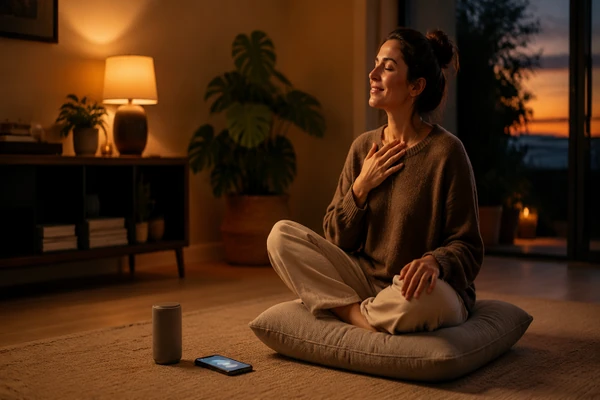
A daily practice does not need to begin with a long session. Two quiet minutes after waking can be more sustainable than an ambitious routine that disappears after three days. Pairing the pause with an existing habit helps: after making tea, before opening a laptop, or once the lights are dimmed at night.
It also helps to remove the demand for a particular result. Some sessions may feel spacious; others may reveal distraction or tension. Both experiences can build awareness. Progress may mean remembering to pause sooner, recognizing a shallow pattern during stress, or meeting a busy mind with less judgment.
Guidance can make that consistency easier. A clear voice, thoughtful pacing, and a defined beginning and end reduce the need to plan every detail. Over time, repeated practice can become a familiar doorway into presence rather than another item on a productivity list.
A Timeless Tool for the Present
Ancient traditions approached the breath with depth, discipline, and meaning. Modern life gives people new reasons-and new formats-for returning to it. The setting may be different, but the central invitation remains simple: pause, feel what is happening, and begin again with the next inhale.
Op e n brings mindful guidance into contemporary routines through experiences designed around presence and practice. Explore Op e n to find a format that can meet real life as it is, one conscious breath at a time.
