

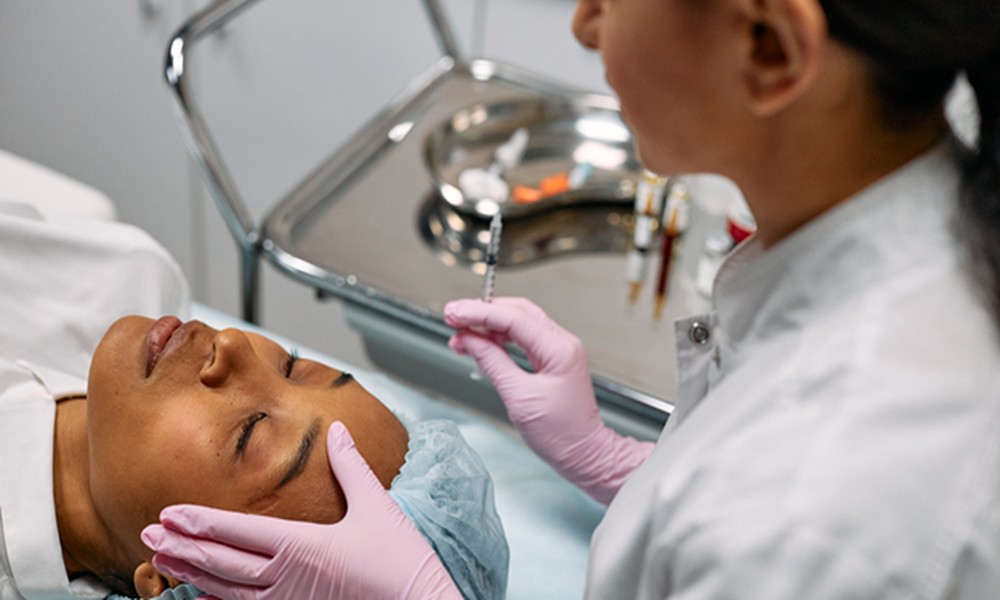
There is a widespread misconception that acne is a temporary rite of passage reserved exclusively for teenagers. For millions of adults, however, chronic breakouts remain a frustrating, painful, and deeply discouraging reality well into their twenties, thirties, and forties. Waking up to painful cystic blemishes when you are simultaneously managing a career, a mortgage, or a family can feel incredibly isolating.
Adult acne behaves fundamentally differently than adolescent acne. While teenage breakouts are typically driven by raging pubertal androgens and manifest as surface-level blackheads or whiteheads across the T-zone, adult acne tends to be deeply inflammatory, cyclical, and stubborn. It frequently targets the lower third of the face, anchoring itself along the jawline, chin, and neck in the form of deep, painful, sub-surface cysts.
Because adult skin has a slower cellular turnover rate and is more prone to dryness than teenage skin, harsh over-the-counter drying agents often do more harm than good, shattering your delicate skin barrier without clearing the blemishes. If you are tired of wasting money on trial-and-error skincare trends, booking an appointment with a board-certified dermatologist near me unlocks access to targeted clinical diagnostics and prescription-strength therapies that heal your skin from the inside out.
Here are five advanced medical treatments that dermatologists use to successfully clear persistent adult acne.
1. Custom-Formulated, Prescription-Strength Topical Retinoids
While the beauty industry heavily markets over-the-counter retinol serums, these commercial formulations are often too diluted to make a meaningful dent in chronic adult acne. Dermatologists bypass these weak cosmetic buffers by prescribing pure, pharmaceutical-grade topical retinoids, such as Tretinoin, Adapalene, or Tazorotene.
These advanced medications work at a molecular level to normalize cellular turnover within your hair follicles. By forcing old skin cells to shed efficiently, retinoids prevent the sticky buildup of keratin and sebum that creates a microscopic plug (microcomedone). Beyond clearing active blemishes, prescription retinoids dramatically accelerate the fading of post-inflammatory hyperpigmentation (the dark marks left behind by old acne) and stimulate collagen to smooth out shallow acne scars.
2. Hormonal Modulators (Spironolactone and Oral Contraceptives)
For a vast majority of adult women, persistent jawline acne fluctuates in direct synchronization with their menstrual cycle. This pattern points to a hormonal trigger-specifically, the local sensitivity of sebaceous (oil) glands to circulating androgen hormones. When androgens trigger these glands, they produce an abundance of thick, sticky oil that acts as fuel for acne-causing bacteria.
To combat this loop, dermatologists often prescribe Spironolactone. Originally an FDA-approved blood pressure medication, Spironolactone possesses a unique secondary capability: it safely acts as an androgen blocker. By selectively binding to the oil glands’ androgen receptors, it reduces sebum production to a normal baseline, completely cutting off the root cause of hormonal cysts. For appropriate candidates, specific combination oral contraceptive pills can also be utilized to stabilize fluctuating hormone baselines.
3. Target-Specific Oral Antibiotics paired with Benzoyl Peroxide
When adult acne presents with widespread, painful, pus-filled lesions, a dermatologist may strategically introduce a short, highly controlled course of oral antibiotics, such as Doxycycline or Sarecycline. In dermatological care, these medications are not used solely to kill bacteria; they are selected primarily for their profound, systemic anti-inflammatory properties.
To prevent the development of bacterial resistance, a dermatologist will always pair an oral antibiotic with a topical wash like Benzoyl Peroxide. This combination rapidly de-escalates a severe flare-up, flattening painful cysts, reducing widespread redness, and giving the skin barrier a stable, calm environment to begin the structural healing process.
4. Advanced Medical-Grade Chemical Peels
When performed in a sterile, clinical environment, a medical-grade chemical peel is a powerful tool for interrupting chronic acne cycles. Unlike superficial spa facials, medical peels utilize high-potency, clinically calibrated acids-such as high-concentration Salicylic Acid, Glycolic Acid, or Trichloroacetic Acid (TCA)-to penetrate deep into the dermal layers.
Salicylic acid is highly lipophilic (oil-soluble), meaning it can physically dissolve its way through heavy oil to clear out the inner lining of impacted pores. These advanced clinical peels rapidly lift away dead skin, neutralize active acne-causing bacteria, and flatten stubborn surface texture, making them an exceptional option for patients who want to fast-track their clearance while managing uneven skin tone.
5. Oral Isotretinoin (Accutane Therapy)
For individuals battling severe, scarring, or entirely treatment-resistant nodulocystic acne, Oral Isotretinoin remains the ultimate medical intervention. Isotretinoin is a highly potent, systemic vitamin A derivative that stands alone as the only acne treatment capable of addressing all four major root causes of breakouts simultaneously.
It permanently shrinks the physical size of the sebaceous glands, slashes sebum production to near zero, alters the follicle environment so acne bacteria cannot survive, and completely shuts down localized inflammation. Because Isotretinoin is a powerful medication that requires close clinical monitoring, regular blood work, and strict compliance protocols, it is exclusively prescribed and supervised by a board-certified dermatologist.
Living with chronic adult acne can take a severe toll on your self-esteem, social confidence, and mental health. However, you do not have to accept painful breakouts as a permanent feature of your adulthood. By stepping away from the retail beauty aisle and seeking advanced medical intervention, you can replace temporary cover-ups with a scientific, long-term cure that restores your skin to its healthiest, smoothest, and most radiant state.
