

While most people see orthodontics as primarily a way to straighten teeth, it is more than that. A person’s oral structure and jaw shape, along with the palate and tongue, often have a huge impact on how well an individual breathes. Airway orthodontics is a discipline that looks at the connection between oral development and healthy breathing patterns. In Milwaukee, it provides a holistic understanding of crowded teeth, mouth breathing, snoring, and future jaw function for kids, teens, and adults.
What Is Airway Orthodontics?
Airway orthodontics is a field of orthodontics that considers the airway support provided by the teeth, jaws, tongue, and palate. The focus of this approach is not just on the alignment of teeth, but on whether the mouth is wide and open enough to function well.
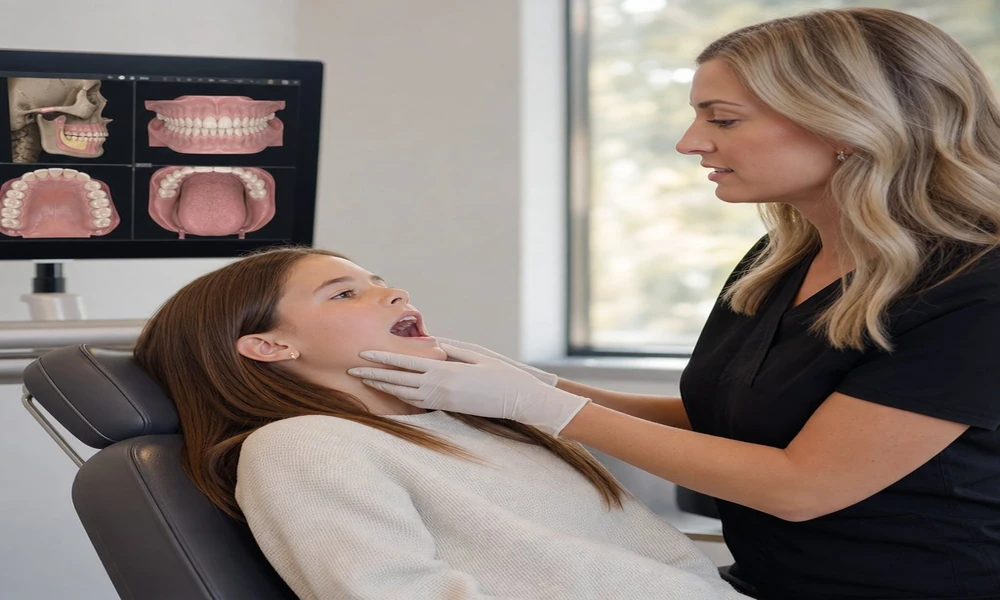
airway orthodontics evaluation of jaw tongue and palate
Airway orthodontists typically evaluate a patient for factors such as jaw growth, dental arch width, tongue posture, bite position, and indications of mouth breathing. While orthodontics generally is intended to help patients achieve a healthy, attractive smile, airway orthodontics additionally takes into account the patient’s ability to breathe, sleep patterns, and facial development.
Some of the issues that may trigger an airway-related orthodontic evaluation are:
- Crowded teeth
- Narrow dental arches
- Mouth breathing
- Snoring or restless sleep
- High palate or narrow upper arch
- Excessive jaw or bite tension
- Low posture of the tongue
Not every orthodontic problem is the result of an airway issue. However, airway orthodontics helps to identify when oral structures and airway may be interacting.
How Breathing Impacts Your Smile
Nasal breathing is vital to healthy oral and facial development. When nasal breathing is hampered or restricted, people may turn to breathing through the mouth (investigate this site). Over time, especially in children whose bones have not finished growing, mouth breathing may lead to issues such as tongue and jaw development or width of the upper dental arches.
Another important aspect of healthy oral breathing includes the posture of the tongue, ideally gently resting on the palate of the mouth. When the tongue sits lower in the mouth, the upper jaw may not be able to grow as wide, which contributes to crowding and bite problems.
“Airway orthodontics is about looking beyond where the teeth are today and asking what patterns helped create that position,” says Lena Morris, an orthodontic treatment planning specialist.
Airway Orthodontics for Kids
Airway-related orthodontic evaluations are often recommended for kids. A patient’s teeth and jaws are still developing during the childhood years. Early intervention doesn’t necessarily mean the child will need braces right away; sometimes it means monitoring the child’s growth patterns, addressing oral behaviors such as thumb-sucking, and planning for the optimal treatment.

child airway orthodontics growth and breathing assessment
A child’s growth and facial development are evaluated for a wide variety of factors including palate, teeth, tongue posture, and nasal or mouth breathing. Treatment could involve growth modifications to the jaw, widening of dental arches, and more space for the permanent teeth that are waiting to erupt.
You might ask about airway orthodontics when your child presents with crowded teeth in the baby dentition, sleeping with the mouth open, snoring or waking up tired, or has a history of excessive thumb-sucking or pacifier usage.
Airway Orthodontics for Adults
Airway orthodontics also has a place in treatment for adults. However, the treatment goal will differ because growth is completed. Adult airway orthodontics focuses on optimizing dental arch shape, bite function, and tongue space.
Some adults may explore an airway orthodontic option following a relapse of orthodontic treatment, or if suffering from clenching and jaw pain, snoring, or other oral problems. Orthodontics is not intended to replace the medical treatment of sleep disorders, with the full details at www.nhlbi.nih.gov/health, though it may be part of the larger plan in terms of airway and comfort.
Airway Orthodontics vs. Traditional Orthodontics
Both traditional and airway orthodontics utilize similar appliances and devices, including braces, clear aligners, expanders, or retainers. But where the two disciplines differ is the assessment and focus of the case. A traditional orthodontic case may focus solely on teeth alignment, while airway-focused cases are concerned with how the teeth, jaws, palate, and tongue interact to create a healthy airway. This may involve identifying and correcting a root cause behind the dental condition rather than just masking the issue.
A Comprehensive Approach to Orthodontics
By looking at the airway of patients, Untethered’s Milwaukee practice provide families with a more comprehensive perspective on oral health. While straight, aligned teeth are a significant component of orthodontic treatment, so are mouth breathing, sleep, jaw function, and long-term stability. For those who are experiencing crowded teeth, mouth breathing, snoring, or any other bite problems, a consult with an airway orthodontist will help provide a fuller picture of what is going on and the various treatment options to consider.
In our Milwaukee office, Untethered might discuss habits like sleep posture, daytime drowsiness, allergies, or how a child eats and swallows as part of an evaluation.
These conversations help us design a treatment plan that fits into your family’s lifestyle.
